A fast energy transition away from fossil fuels towards renewable energies is essential for tackling climate change. However, not all renewable energies are true solutions to the climate crises.
False solutions of energy production are for example often renewable energy megaprojects, such as hydropower plants, agro fuels and nuclear. Looking more closely at hydropower, it is important to highlight that also small-scale solutions such as small hydro plants can have considerable negative effects on nearby communities.
Hydropower projects are often propagated as a clean and green source of electricity. Particularly in tropical regions, hydropower reservoirs emit significant amounts of GHG. Gases are emitted from the surface of the reservoir, at turbines and spillways, and for tens of kilometres downstream. Large hydropower projects disrupt the transport of silt and nutrients and impair the role of rivers to act as global carbon sinks.
Social impacts are widely reported. Displacement, loss of livelihood, poorer health and loss of cultural heritage are some of the worst impacts of large dams’ construction. Poor and vulnerable groups such as rural populations, small-scale farmers and indigenous communities often bear a disproportionate share of the negative impacts. Compensation usually only occurring once as insufficient cash payment or in the form of an area of land provided for resettlement, which are often resource-depleted and environmentally degraded areas. Often concerned communities do not even have access to the generated electrical energy.
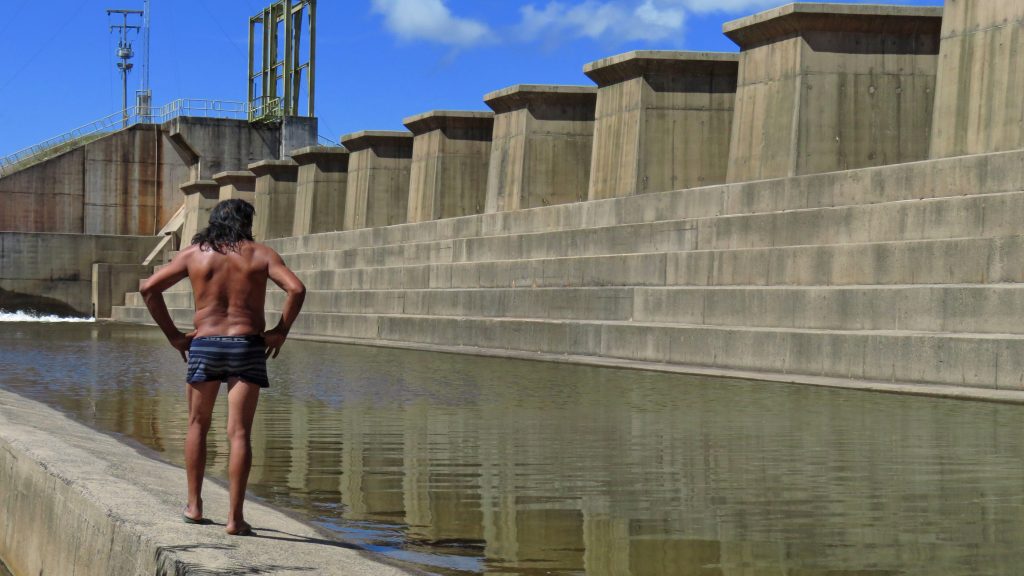
160 dams threaten Juruena
Not everything labeled as renewable energy is good, but potentially causes sever environmental and social damage to the environment and its residents.
Material and Publication
The campaign “To what end?”
The appeal of Bheka Munduruku, by Uma Gota no Oceano, brings the young indigenous woman as the protagonist to show the threats to which the Munduruku are susceptible, such as mining in Indigenous Lands and the construction of hydroelectric plants. Check it out »
 Energy and Climate Justice